Guides · 11 min read
How to measure yourself for a bespoke cloth
A complete home guide to taking the measurements a Ghanaian tailor needs for a shirt, kaftan, jalabia, agbada, dress, or kaba, using a soft tape, a mirror, and centimetres.
· Nsaano Atelier

A bespoke cloth is patterned to the body you actually have, not the size on a shop label. If you are ordering from London, Toronto, or Berlin, those numbers are the fitting. Taken well, they let a tailor in Accra cut a kaftan, a jalabia, a dress, or a bridal kaba without ever putting a tape on you in person. Taken badly, they inherit every error into the shoulder, the sleeve, and the hem.
This is the method we ask for on a custom commission and on any collection piece you would rather have cut to your numbers than to a standard size. It covers mens and womens garments. Extra points for an agbada, a kaba and slit, or trousers sit at the end.
What you need
A soft tailoring tape marked in centimetres. A metal DIY tape will not sit around a chest. A dressmaker’s tape will.
A mirror, a notebook, and someone to help with the back measurements if you can find them. Shoulder width and garment length are the two that go wrong when you take them alone.
Wear a fitted shirt or vest, not a jumper, and the undergarments you would wear with the finished cloth. Stand on a hard floor, not a thick rug.
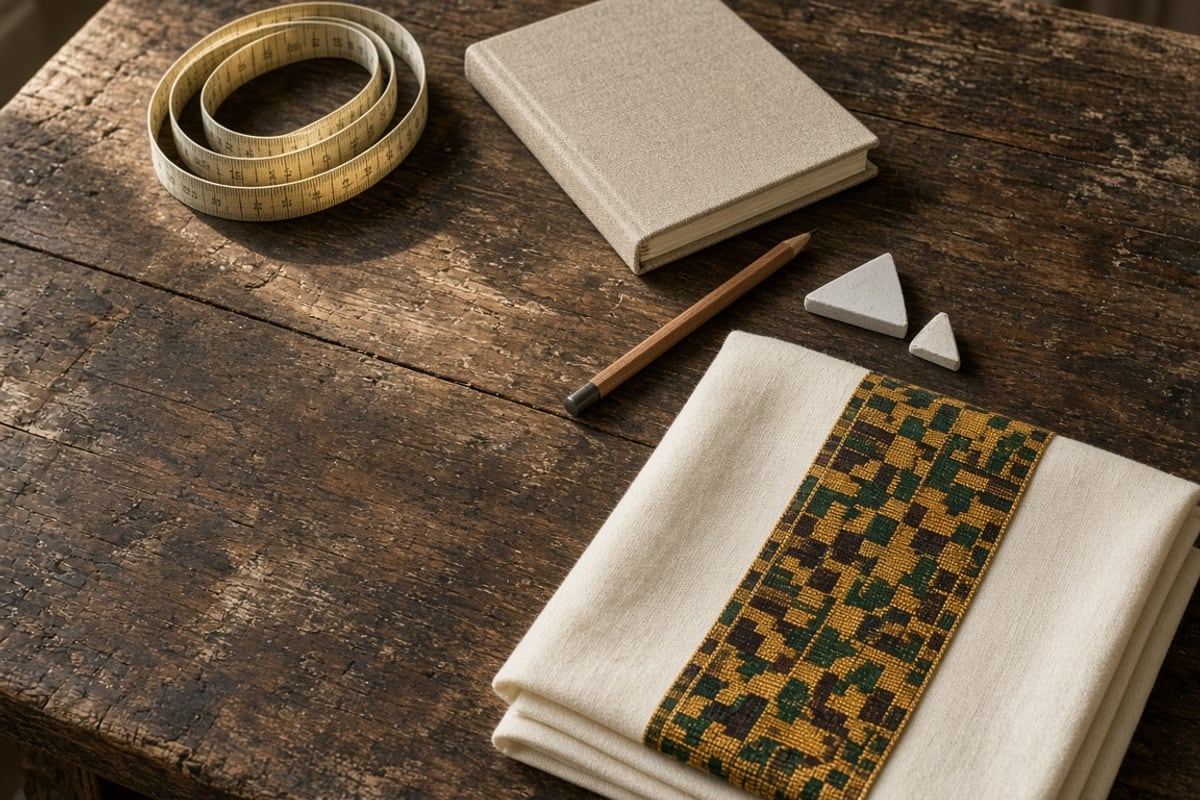
Write every number in centimetres, to the nearest half centimetre. Do not convert from inches in your head. If your tape only shows inches, convert once on paper (inches × 2.54) and send us centimetres only.
How to stand
Stand as you stand in a room, not as you stand in a photograph. Do not hold your breath. Do not square your shoulders more than usual. Do not suck in the waist. The garment has to fit the way you carry yourself on the day, not the way you wish you carried yourself.
Keep the tape level and snug, not tight. You should be able to slide two fingers under it. If the tape bites the skin, the finished cloth will too.
If a number feels uncertain, take it twice and send both. A tailor would rather see the doubt than inherit a guess.
The map
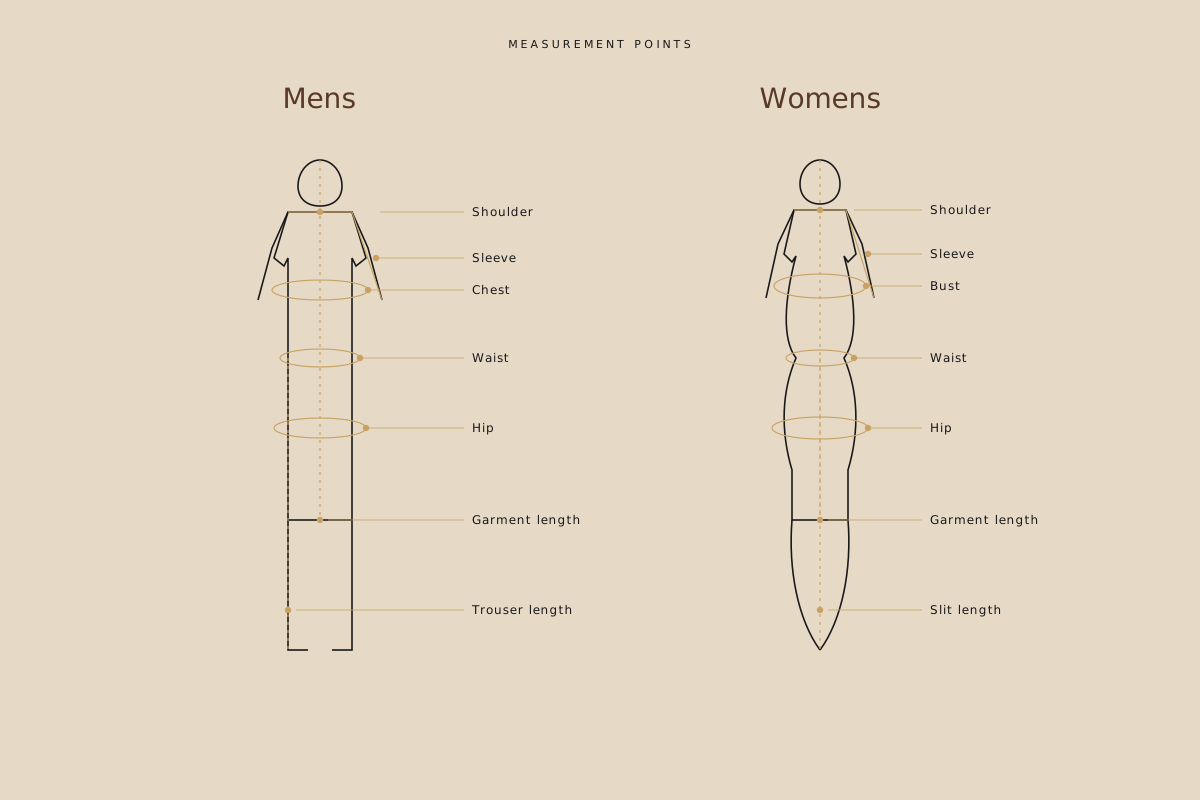
These are the points we use across the house. Mens and womens share most of them. Bust replaces chest on a dress or kaba. Slit length replaces trouser length on a kaba and slit.
Shoulder width
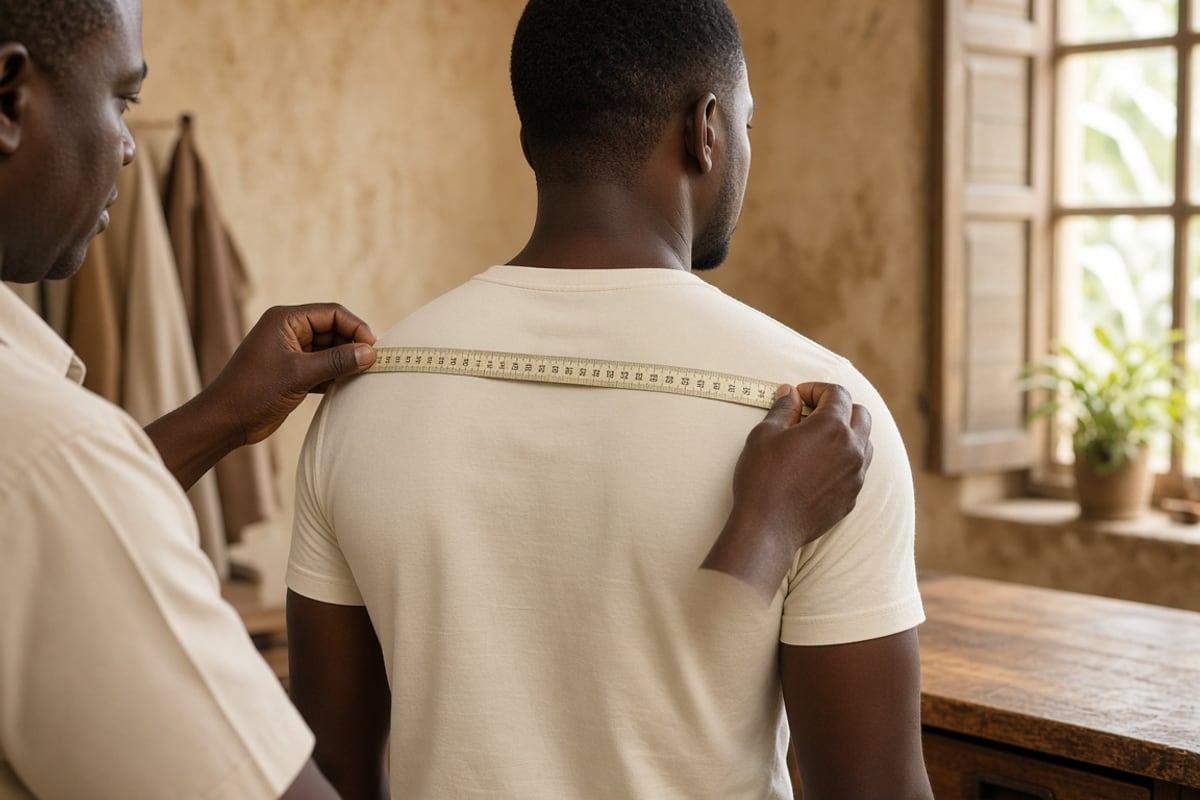
Stand with your back to a helper. Find the bony point at the end of each shoulder with your fingers first, then measure across the back from one point to the other. The tape should sit on bone, not on the sleeve seam of the shirt you are wearing.
If that shirt is oversized, every number after the shoulder inherits the error. This is the measurement that decides whether a blazer, a batik shirt, or an agbada hangs or collapses.
Chest, or bust
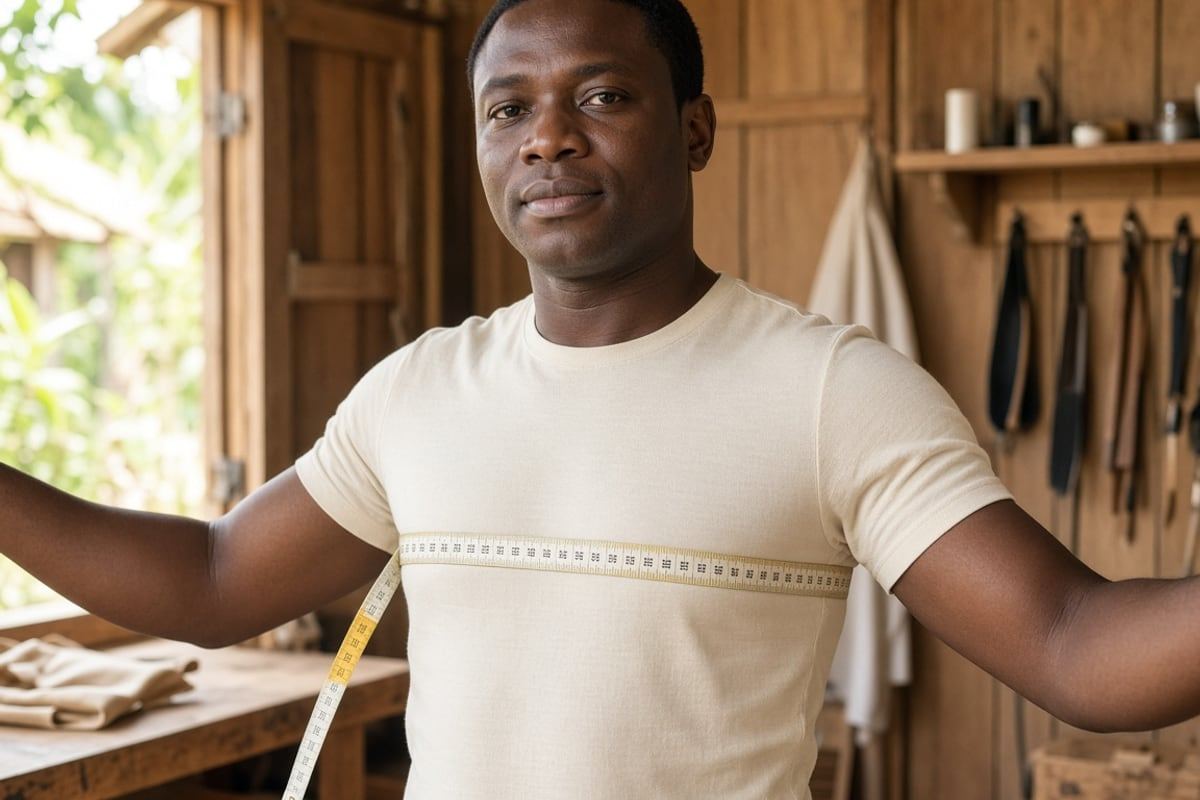
Chest (mens, and most unisex silhouettes). Wrap the tape around the fullest part of the chest, under the arms, parallel to the floor. Keep the tape on the same line at the back as at the front. Breathe out, then read.
Bust (dresses, kaba, bridal). Wrap the tape around the fullest part of the bust, again level, again parallel to the floor. Wear the bra or undergarment you will wear with the finished piece. Chart “chest” values on our size guides map to this bust number.
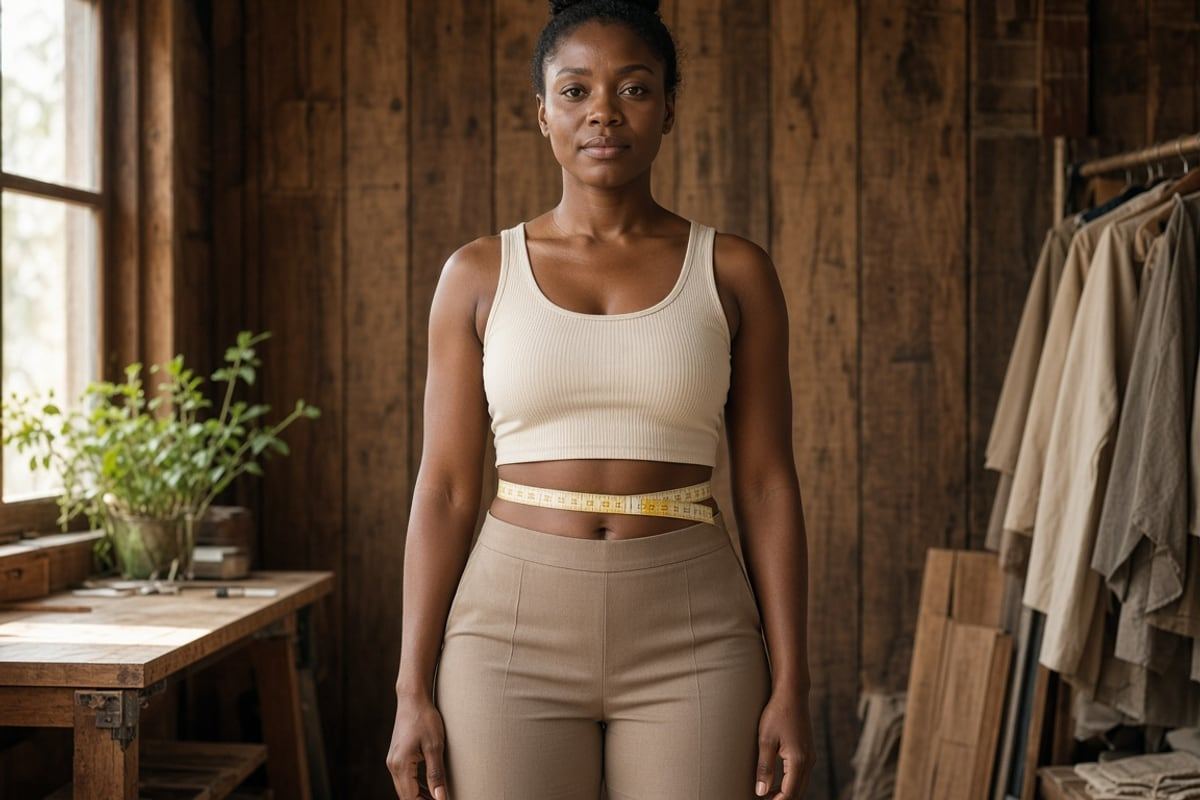
Waist
This is your natural waist, usually the narrowest point of the torso, not the belt line and not the rise of your trousers. On most people it sits a little above the navel. Turn to the side in a mirror if you cannot feel it.
People often send us their trouser size. That is a belt measurement taken low on the hip. An agbada, a kaftan, or a dress cut to a belt number will sit wrong across the middle. If you only remember one warning from this guide, remember this one.
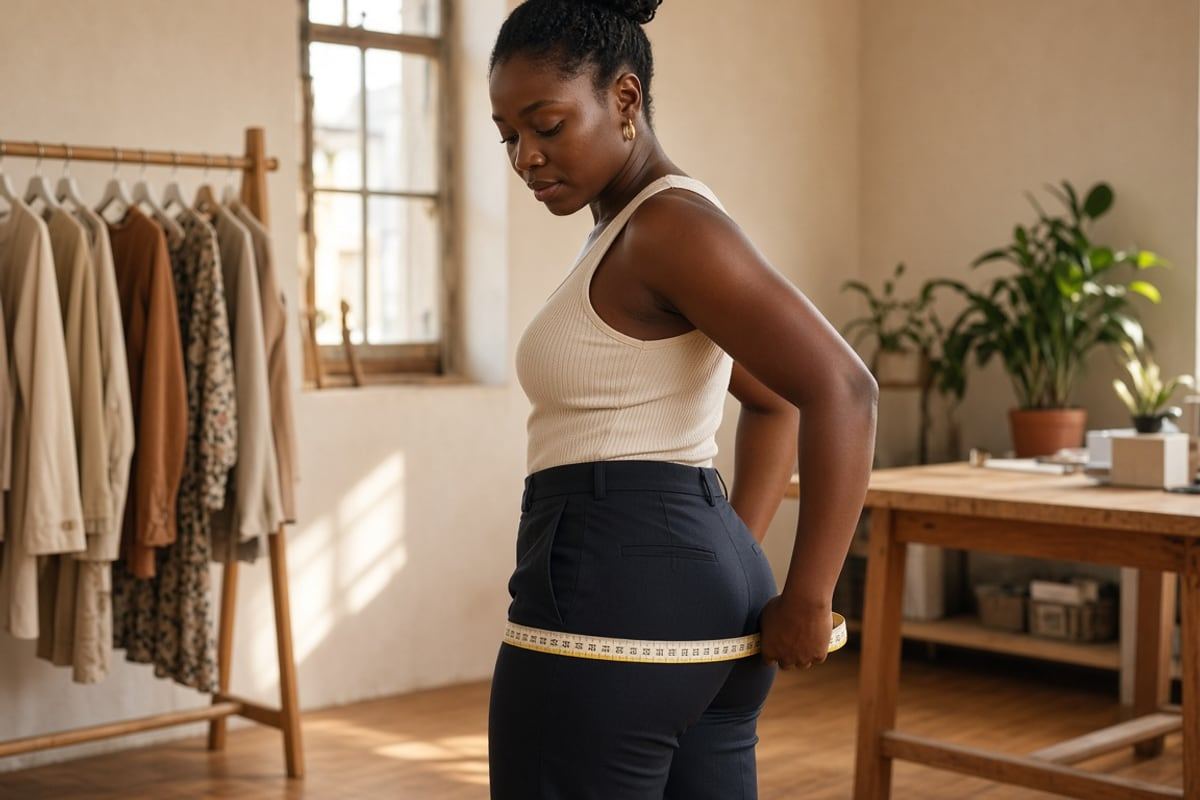
Hip
Measure around the fullest point of the hips and seat, roughly twenty centimetres below the waist. Keep the tape level. If you are measuring for a slit skirt, a dress, or tailored trousers, this number matters as much as the waist.
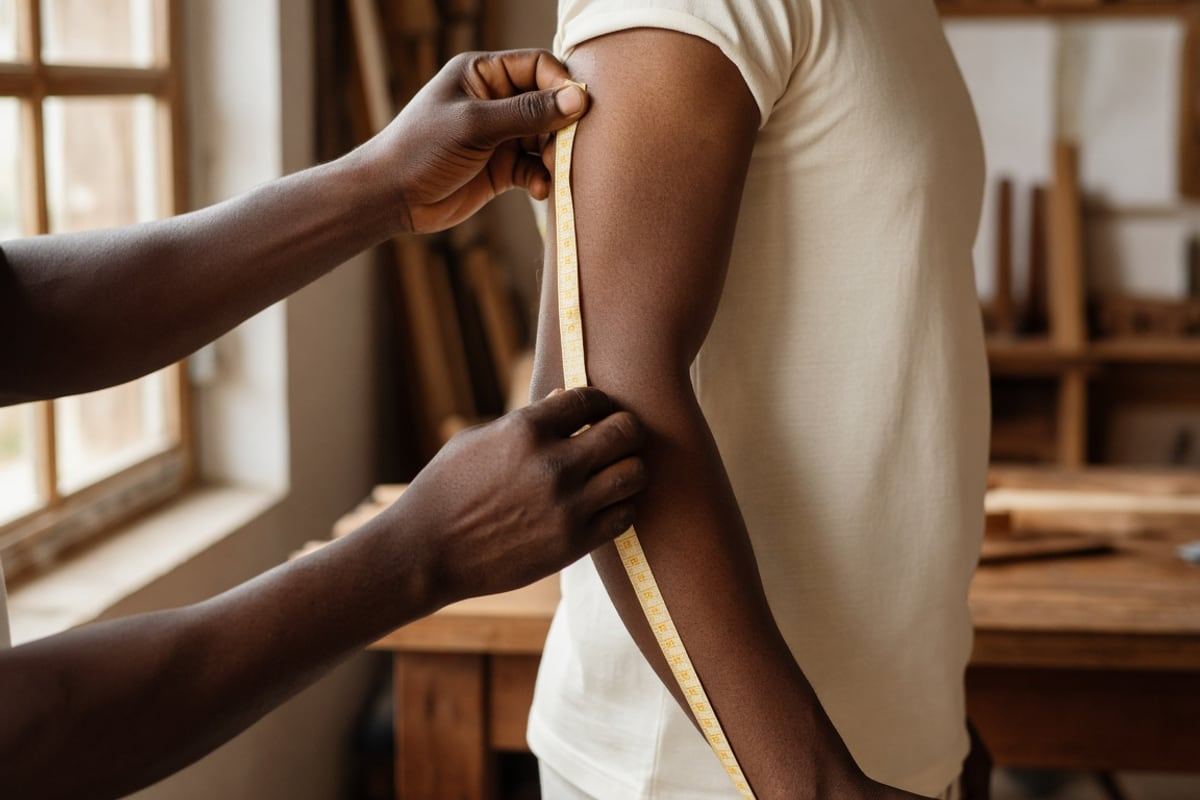
Sleeve
Bend the arm slightly, as if you were about to shake someone’s hand. Measure from the same shoulder bone you used above, down the outside of the arm, to the wrist bone, or to where you want the sleeve to finish.
A straight arm shortens the number. A fully bent arm lengthens it. Slightly bent is how you wear the cloth.
For a short sleeve on a dress or kaba, stop where you want the hem of that sleeve to sit, and say so in the notes.
Neck, bicep, and extra ease
Neck (shirts, some jalabia). Around the base of the neck where a collar would sit, with room for one finger.
Bicep (agbada, wide-sleeve kaftan, some jalabia). Around the fullest part of the upper arm, relaxed. The wide sleeve has to pass this point without pulling.
You do not need these for every garment. Send them if you are commissioning a shirt with a collar, or an outer robe with volume.
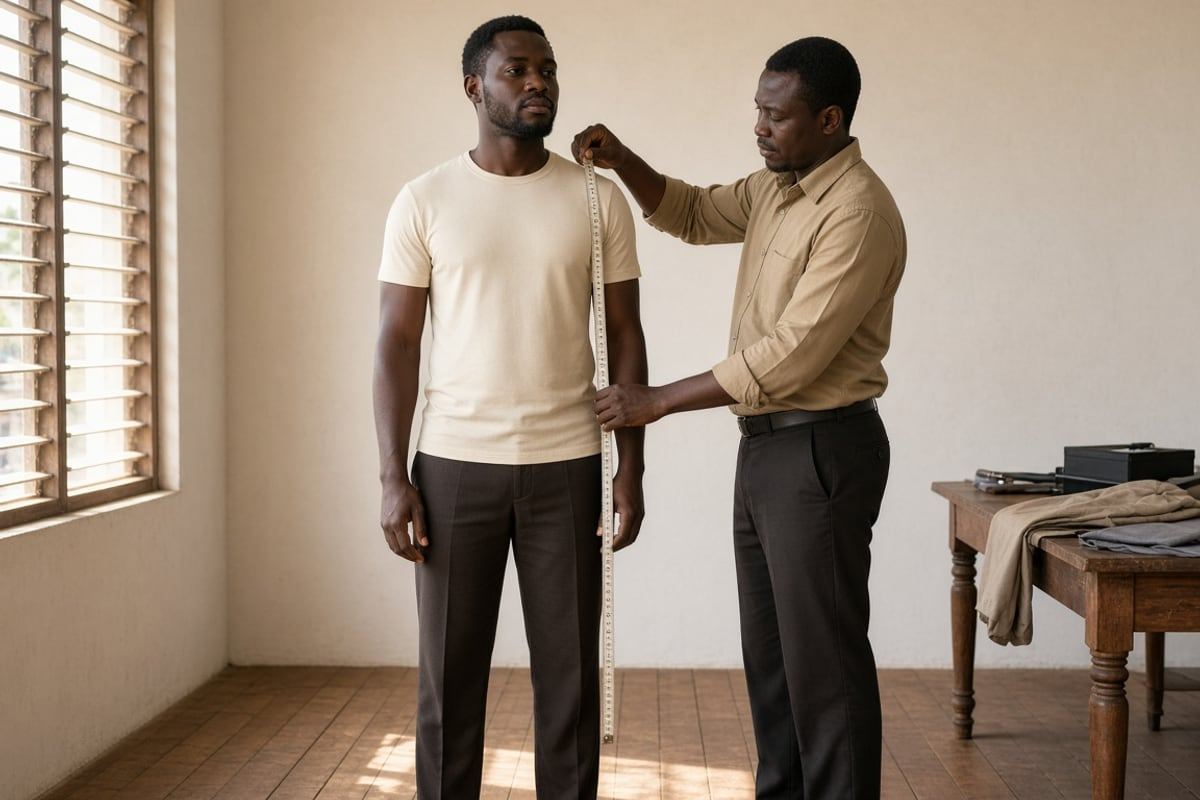
Garment length
From the highest point of the shoulder, next to the neck, straight down the front to where you want the hem to fall.
Typical falls, as a starting point rather than a rule:
- Shirt or top: mid fly to below the seat
- Dress: knee, mid calf, or ankle
- Kaftan or jalabia: mid calf to ankle
- Agbada outer robe: ankle, or floor for ceremony
- Kaba blouse: to the hip or a little below, depending on the brief
If you already own a length you like, measure that garment on a hanger and send us the number with a photograph of it worn.
Trouser length and slit length
Trouser length. From the natural waist to the top of the foot, or to where you want the hem. Say whether you will wear the trousers with a particular shoe.
Slit length (kaba and slit). From the waistline of the slit skirt straight down to the finished hem. This is independent of the kaba blouse length. Send both.
Inseam, if you know it: from the crotch seam down the inside leg to the hem. Useful for tailored trousers. Not required for an agbada set if you have sent waist, hip, and trouser length.
What to send for which cloth
You do not send every number every time. Match the garment.
Batik shirt or blazer: neck, shoulder, chest, sleeve, length.
Kaftan or jalabia: shoulder, chest, waist, sleeve, length. Add trouser length if the set includes trousers.
Agbada: shoulder, chest, waist, hip, sleeve, bicep, agbada length, trouser length. The shoulder and sleeve decide whether the outer robe hangs. The rest can shift a little between order and delivery.
Day or occasion dress: bust, waist, hip, shoulder, sleeve, garment length.
Traditional wedding kaba and slit: bust, waist, hip, shoulder, sleeve, kaba length, slit length.
White wedding gown: the dress list, plus a note on bust support and whether you will wear a veil or headpiece that changes how the neckline should sit.
If you are unsure, send the full set. Unused numbers are cheaper than a missing one.
The two places people still go wrong
The first is the shoulder. Almost everyone measures to the edge of an existing sleeve seam. Find the bone with your fingers first.
The second is the waist. A belt measurement is not a waist. Your natural waist is higher. An agbada or a fitted dress cut to a belt number will not sit.
Two smaller errors are worth naming. Measuring over a thick jumper adds centimetres the tailor cannot see. Pulling the tape until it hurts subtracts centimetres the cloth will not forgive.
Send photographs as well
Numbers describe size. They do not describe posture. A straight-on photograph and a side photograph, taken against a plain wall in a fitted shirt or vest, tell a tailor more about how you carry your shoulders than any tape can.
Stand as you stand. Do not pose. Do not crop at the knees if the garment is long. Daylight from the side is enough. Every bespoke commission at Nsaano includes a consultation where we ask for both views, and we will come back to you before cutting if anything looks inconsistent.
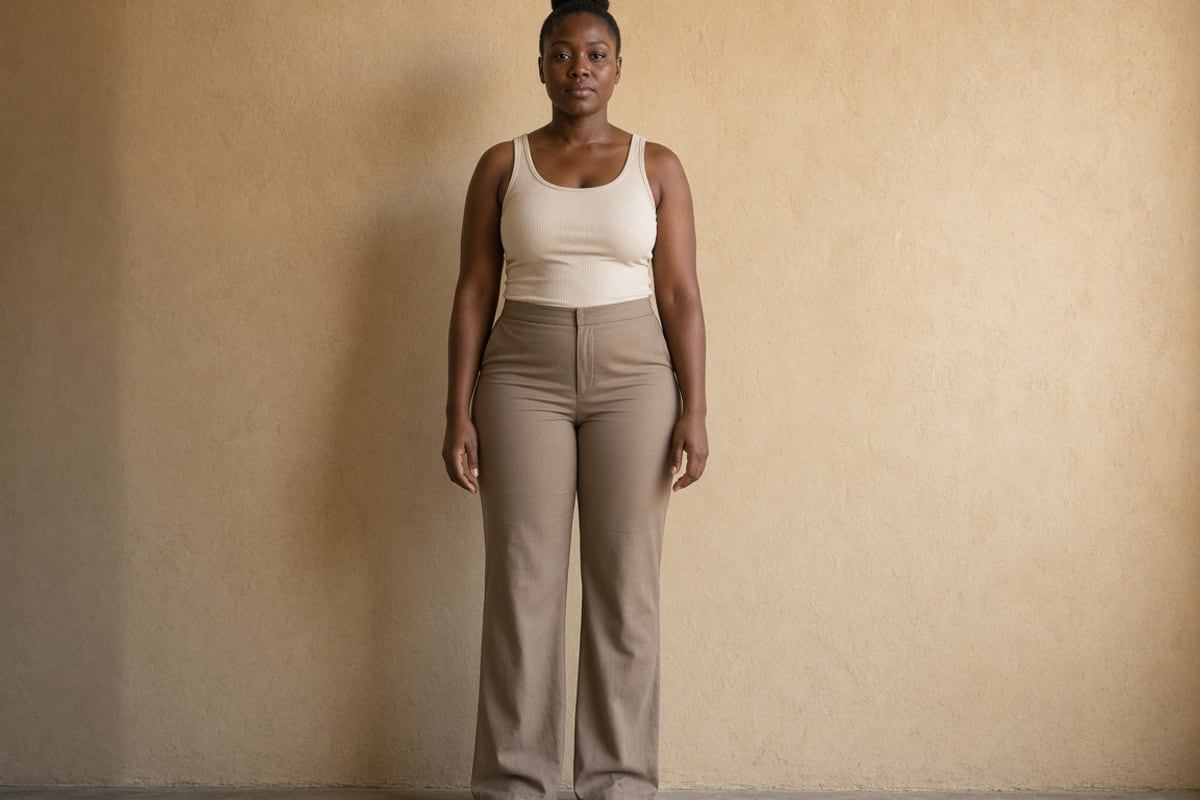
If you would rather not measure yourself at all, send us a garment that already fits well. We will measure that instead and return it with your order.
Before you send
Check the list once:
- Centimetres, not inches.
- Fitted layer, natural stance, tape level and snug.
- Shoulder taken on bone, not on a shirt seam.
- Waist taken at the natural waist, not the belt.
- Length taken from the high shoulder to the hem you actually want.
- Two photographs, front and side.
- A note on the occasion, and any length you already know you like.
Then start a custom brief, or add custom measurements on the product. A tailor replies within two working days, confirms the pattern, and photographs the cloth before it is cut.