Atelier · 8 min read
The cloth that feeds the bench
How a Nsaano order pays a Ghanaian tailor fairly, puts food on the table, and carries their name and work to customers in London, Toronto, and Berlin.
· Nsaano Atelier
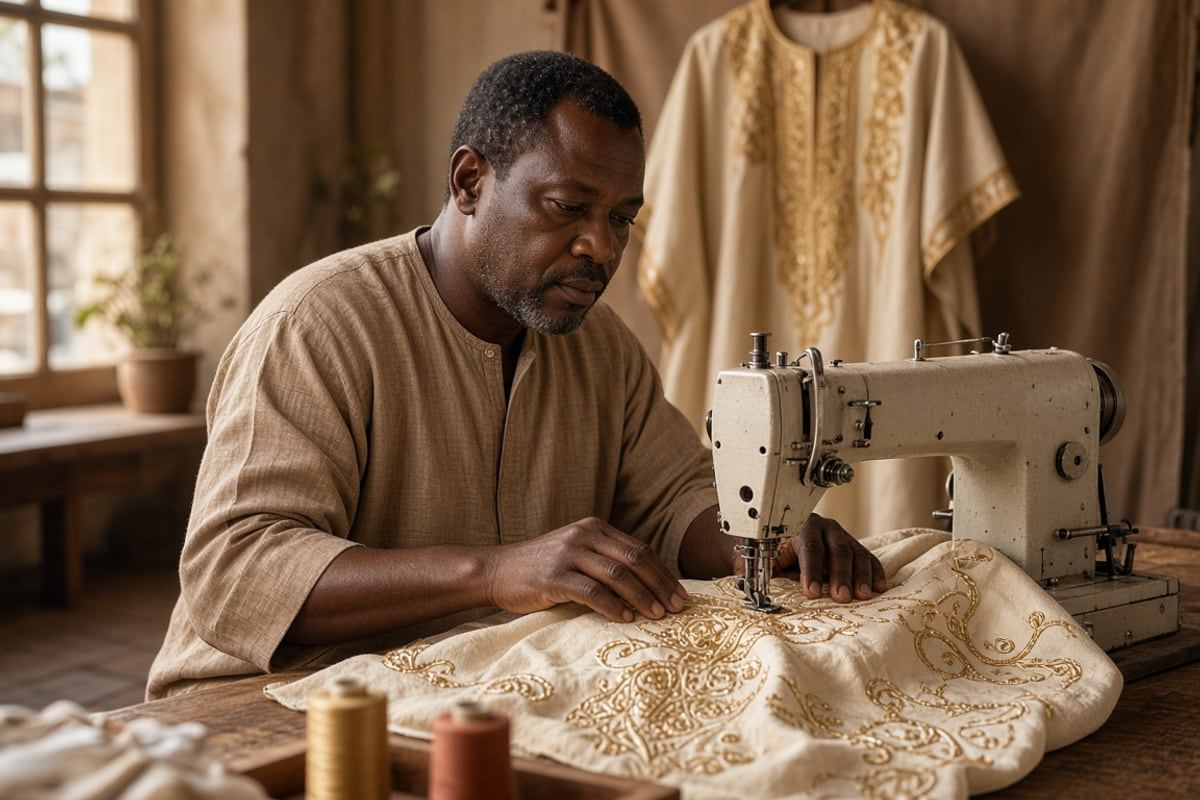
In Accra, a finished kaftan does not leave the bench as a brand story. It leaves as a wage. The same hands that cut the cloth will close it, press it, and see it photographed before it is packed for London or Toronto. That sequence is slow on purpose. It is also how an order becomes dinner, rent, and a name that travels further than the workshop door.
Nsaano started because that wage was not a given. At Elvis Asante’s traditional wedding, the tailors who made the ceremonial cloth did work that was precise and heavy with meaning. The pay was not. The house exists so the next commission does not repeat that gap: ceremony-quality cutting, a fair rate, and a shop window that does not swallow the maker.
What a bought cloth actually pays for
A skilled tailor in Ghana can spend a day on a neckline that will be worn once, in a room full of family, and still be paid as if the work were ordinary alterations. Local rates often price the hours, not the craft. Middlemen take a cut. The customer abroad rarely hears the name of the person who cut the shoulder.
When you buy a Nsaano cloth, the money is meant to reverse that. We pay above local workshop rates. The same tailor who is assigned the commission keeps it from first cut to last stitch. Their name goes on the card that ships with the piece.
That is not a slogan on a hangtag. It is how the bench eats. A jalabia order covers more than thread. It covers the week’s food, a child’s school term, the rent on a room that holds a machine. A bridal kaba, which takes longer and asks more of the embroidery hand, can steady a household through the slow weeks when walk-in work is thin.
We will not print a tailor’s private budget here. Dignity is part of the pay. What we will say is simple: underpaying skilled hands is how ceremonial cloth becomes cheap, and cheap cloth is how the craft thins out.
One garment, one pair of hands
Most workshops split a garment across stations. One person does collars all day. Another does sleeves. It is faster. It also means nobody owns the piece, and nobody is paid as if they did.
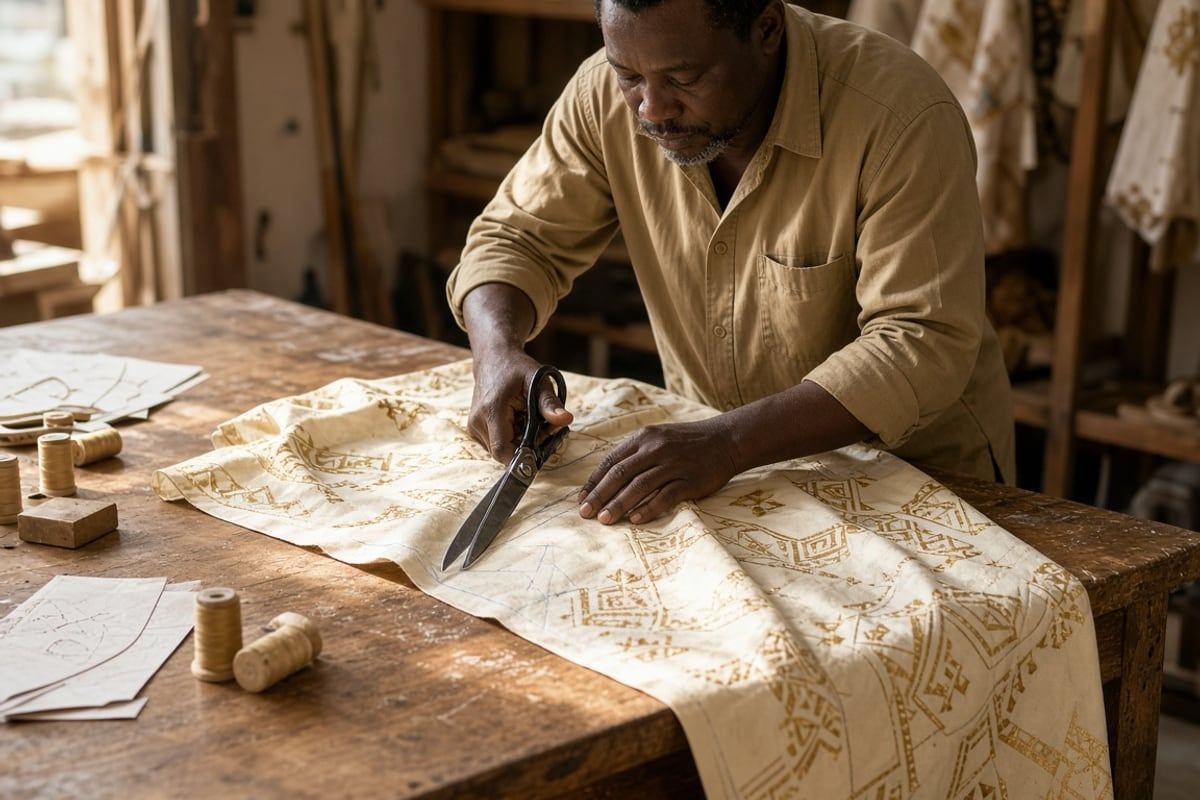
We do not work that way. A commission is assigned to a single tailor who cuts it, stitches it, and finishes it. When something needs correcting, the person who made the decision is the person who fixes it. Nothing is lost in a handover. The remake rule we already keep (if our cutting is at fault, we remake) only works because those hands are still on the bench.
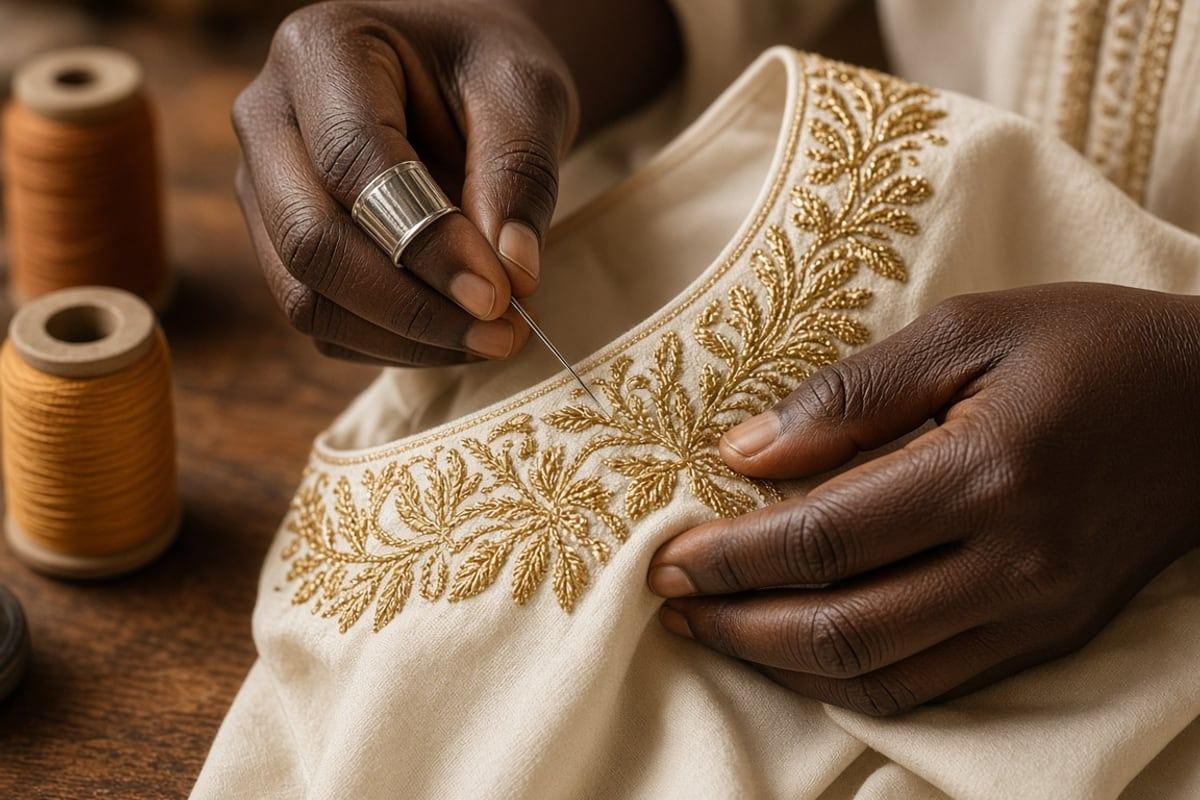
Kojo Ampofo leads jalabia cutting and neckline embroidery in Accra Central. Akosua Mensah patterns traditional bridal kaba and lays gold-thread work so the cloth reads ceremonial without going stiff. Ama Boateng finishes collars so a shirt sits on the collarbone. Efua Darko is often the last pair of hands: hem, pocket, final press, then the photographs.
Fourteen master tailors across Accra and Kumasi is a partner network, not a factory line. Kumasi is where Ernest inspects, packs, and ships. The cutting happens where the tailor sits.
Seen, not anonymous
Pay without a name is still half a life. Factory clothing is made by people the customer will never be asked to imagine. We take the opposite bet: if you are ordering from outside Ghana, you are trusting hands you will not meet, so we name them, and we show the work.
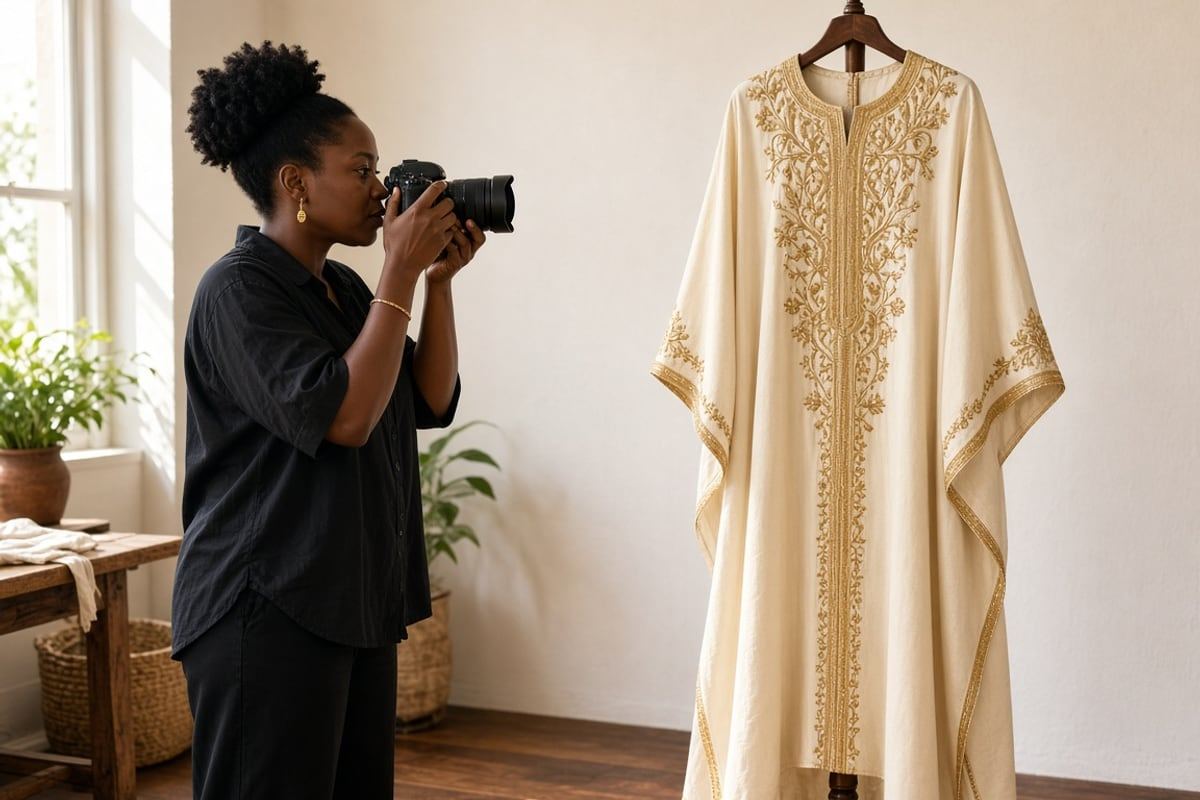
Every commission is photographed at four points: the cloth before cutting, the cut pieces laid out, the first assembly on the stand, and the finished garment before it is packed. Clients get all four. It is the honest answer to buying something that does not exist yet. It is also the tailor’s portfolio, attached to a real order, going to a real address.
More than once a customer has looked at the second photograph and told us the embroidery placement was not what they pictured. That conversation is cheaper before the piece is finished. It is also a conversation with a named maker, not a ticket queue.
Those same photographs travel. They sit in a client’s camera roll in Berlin. They appear on the product page. They turn up in the journal. A tailor who was paid locally for years, with no shop window beyond the street, now has work hanging in houses they have never visited, credited to them.
That is the wider audience. Not a campaign that uses a workshop as scenery. An order that carries a name.
A shop window, not a favour
We are careful with the language. This is not charity, and it is not a directory of hireable tailors. Nsaano is a storefront. The customer is buying a garment. The tailor is being paid to make it, at a rate that respects the skill, and being shown as the person who did.
The old path for many buyers abroad was a printed picture of kente, or a trip home for a fitting they could not repeat. The old path for many tailors was ceremonial work without a fair window and without fair pay. The house sits in the gap between those two failures.
When a batik shirt sells in the UK, or a bridal set ships to Canada, the bench in Accra is not a backdrop for the photograph. It is the reason the photograph exists. The cloth on a table in London is food on a table in Accra, and a reputation that can outlast a single season.
What leaves with the box
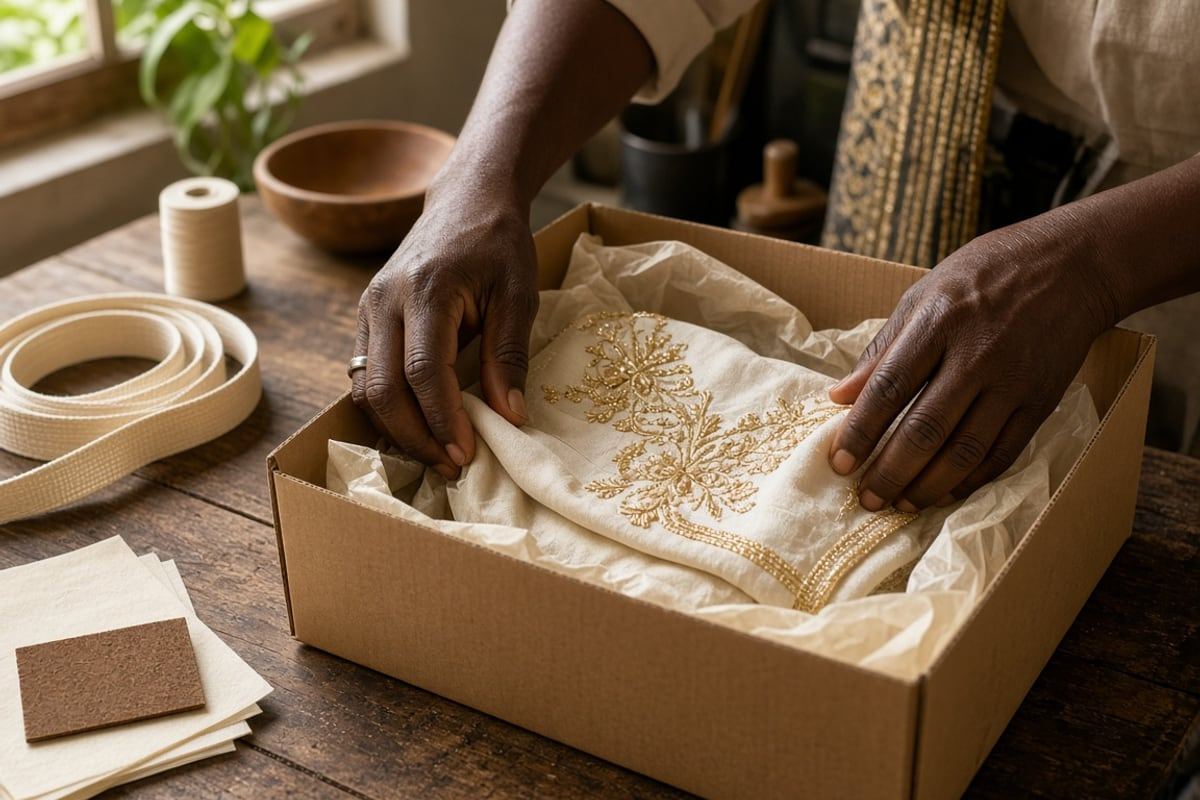
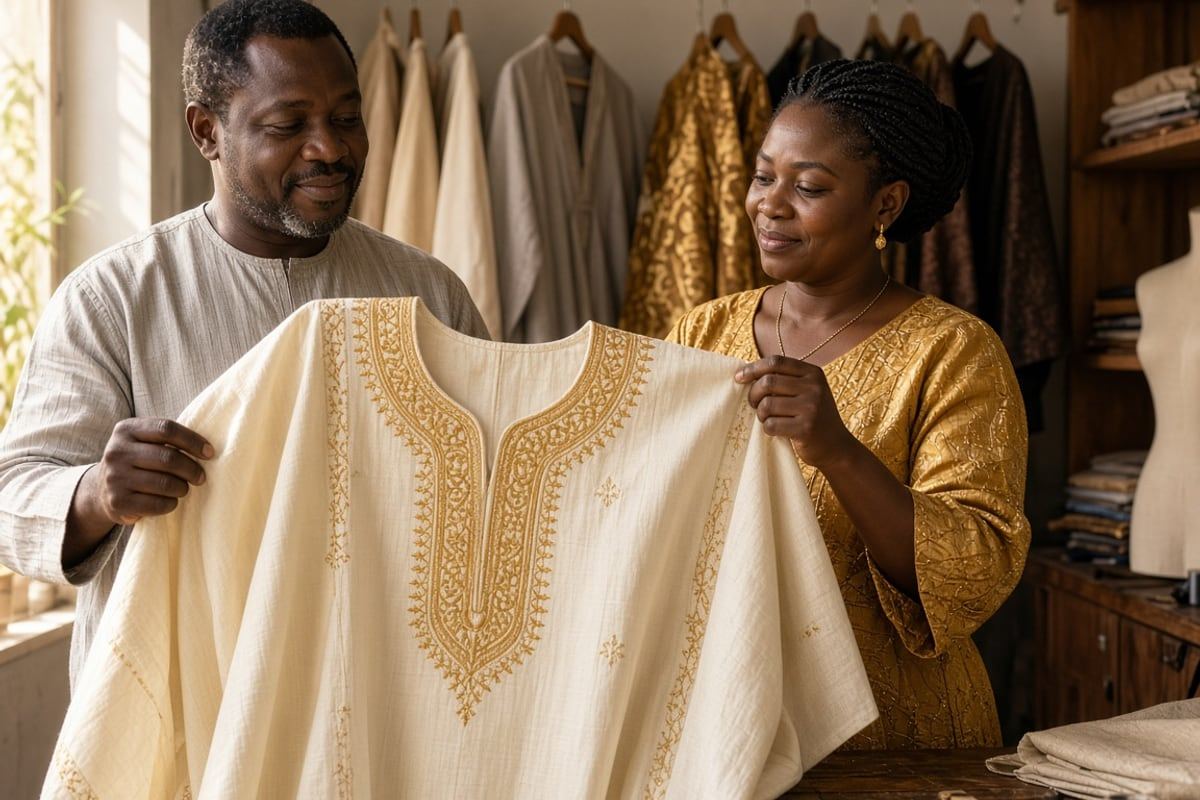
Before a piece is sealed, it is folded in tissue, checked in Kumasi, and sent with a card that names the tailor. The customer gets tracked courier, duties settled at checkout, and studio photographs. The tailor gets the rate, the credit, and another commission if the work holds.
That last part matters as much as the first payment. Exposure that does not turn into the next order is still a story. Exposure that turns into repeat work is a bench that can plan. Most of our orders now come from people who have bought before, or who were told about us by somebody who did. That loop is how a household steadies.
If you want the names and the craft in full, meet the artisans. If you want a garment from those hands, start with the collection or a custom brief. The cloth you buy is cut in Ghana. The table it feeds is there too.